
Top
ARISE ENERGY | B2B GROWTH

Price Watch

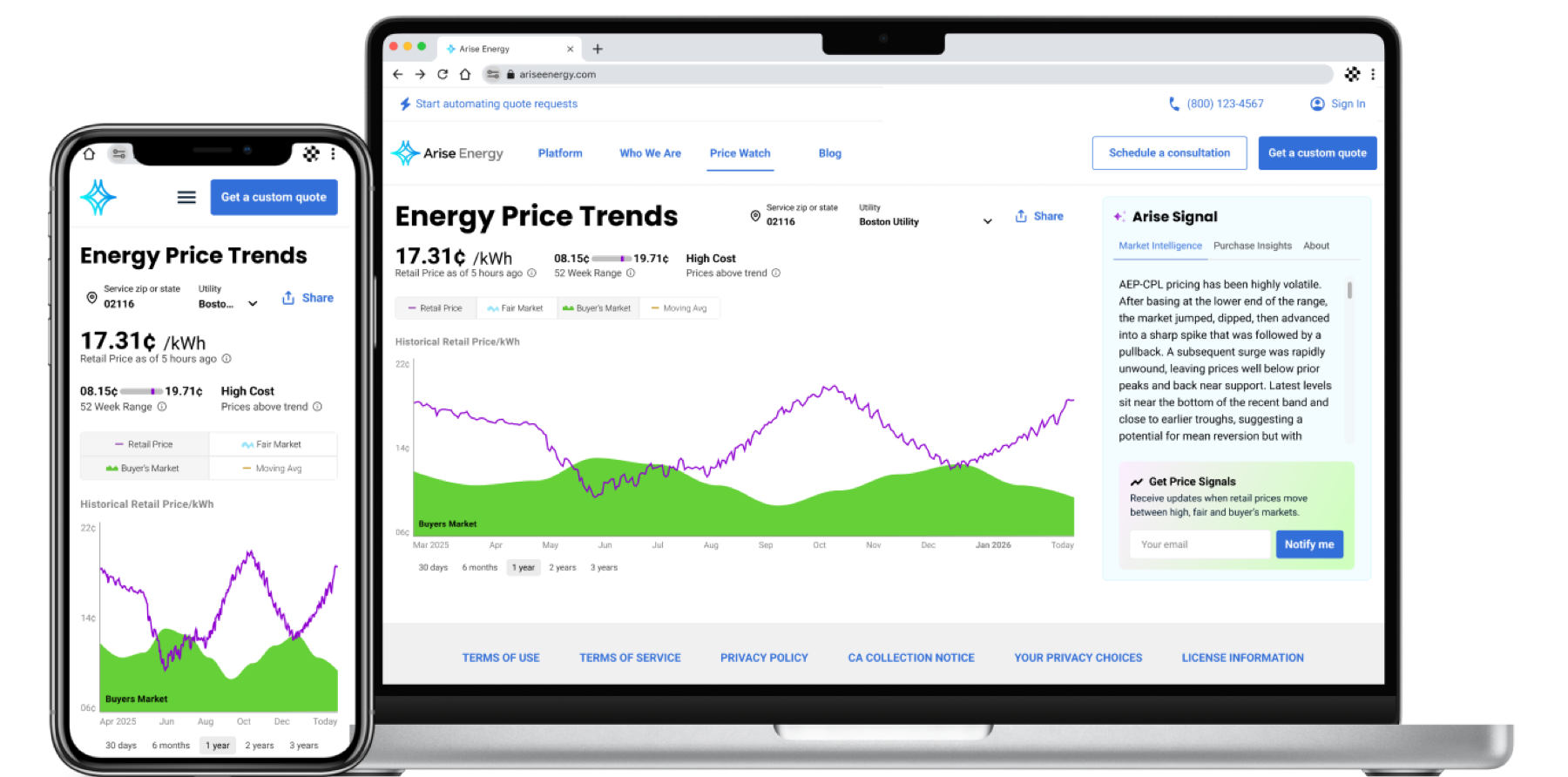
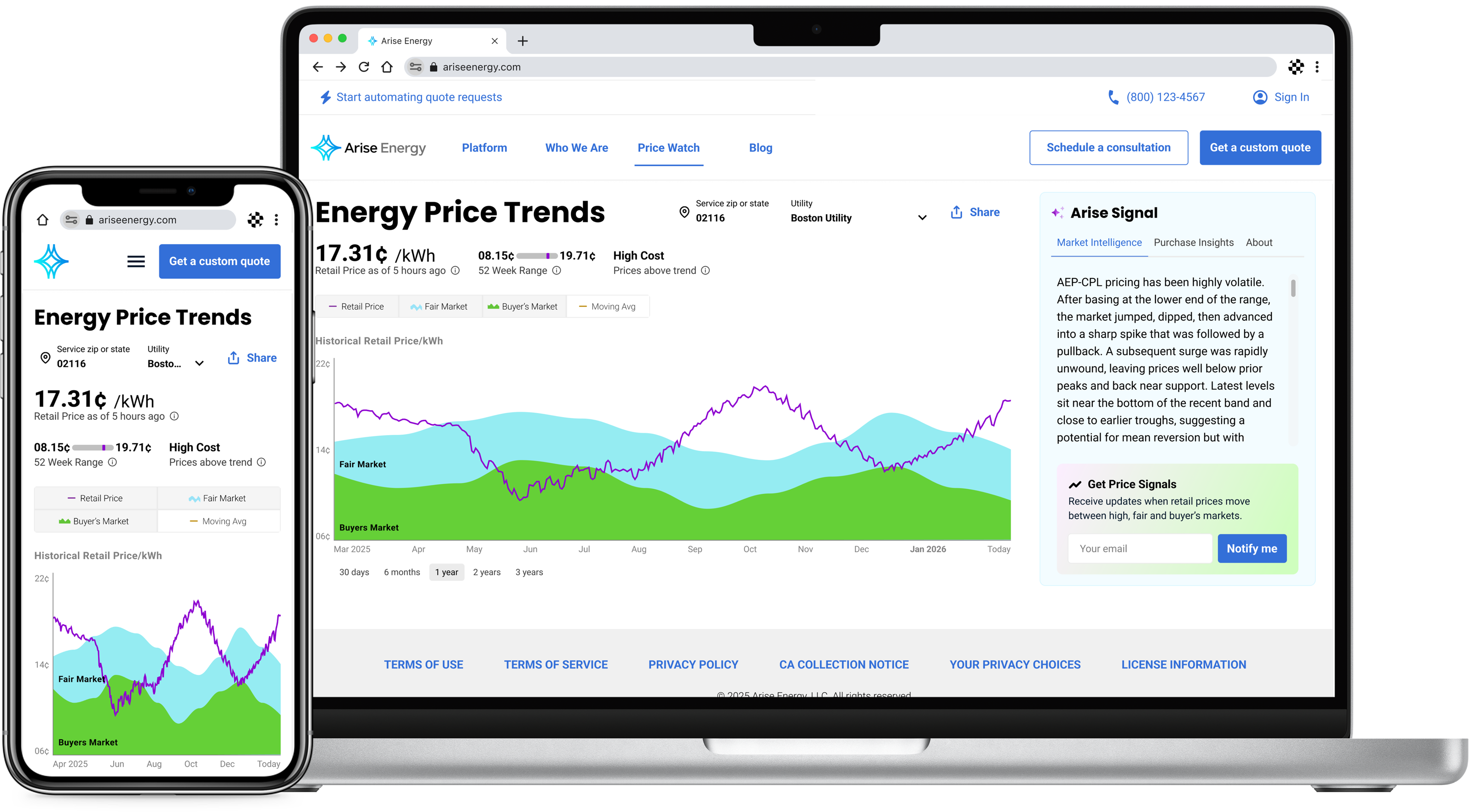
Price Watch is a free energy rate research tool unlike any publicly available at the time of launching.

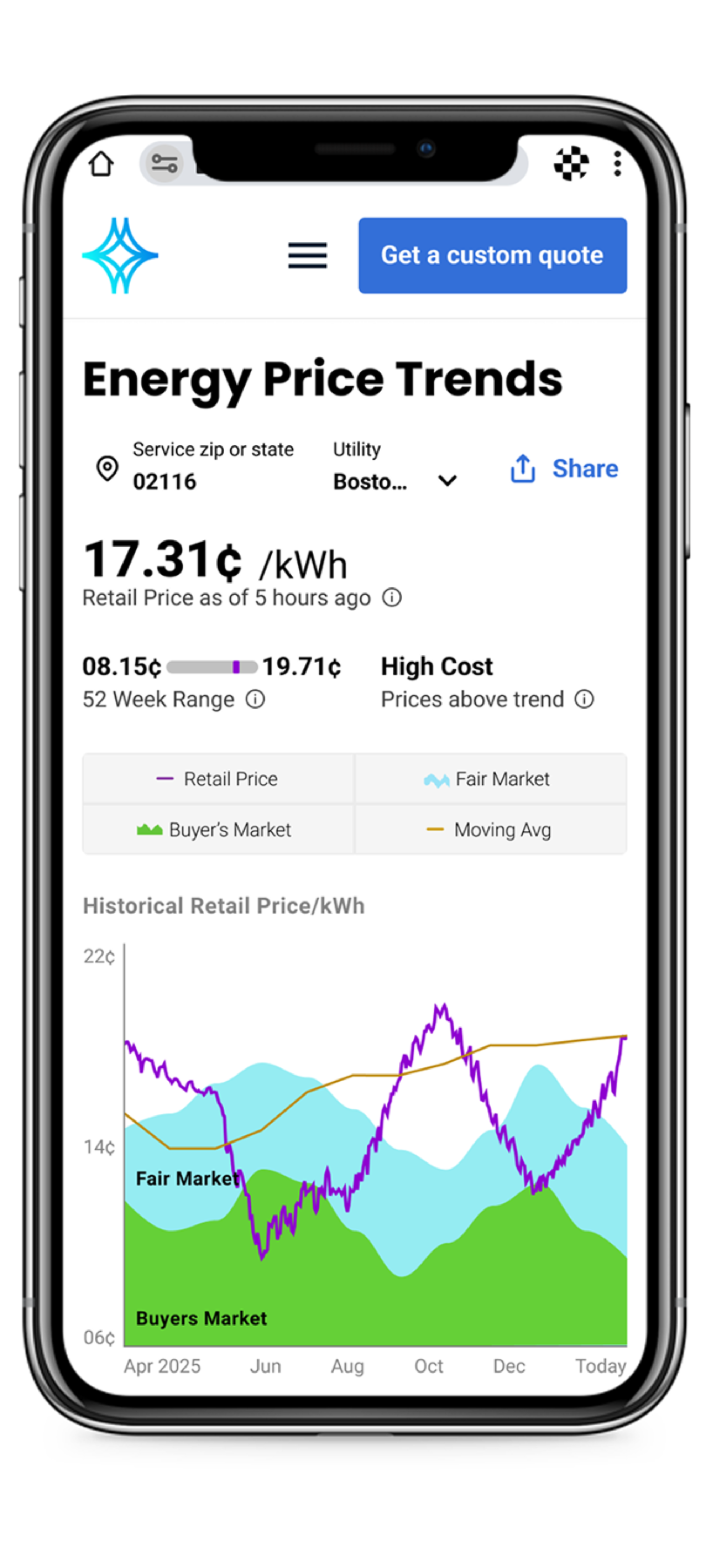
SMB buyers — including business owners, operations and finance leaders, and project managers — use the visualization to access localized, current and historical commercial energy retail rates, a 52-week rate range and current market conditions.

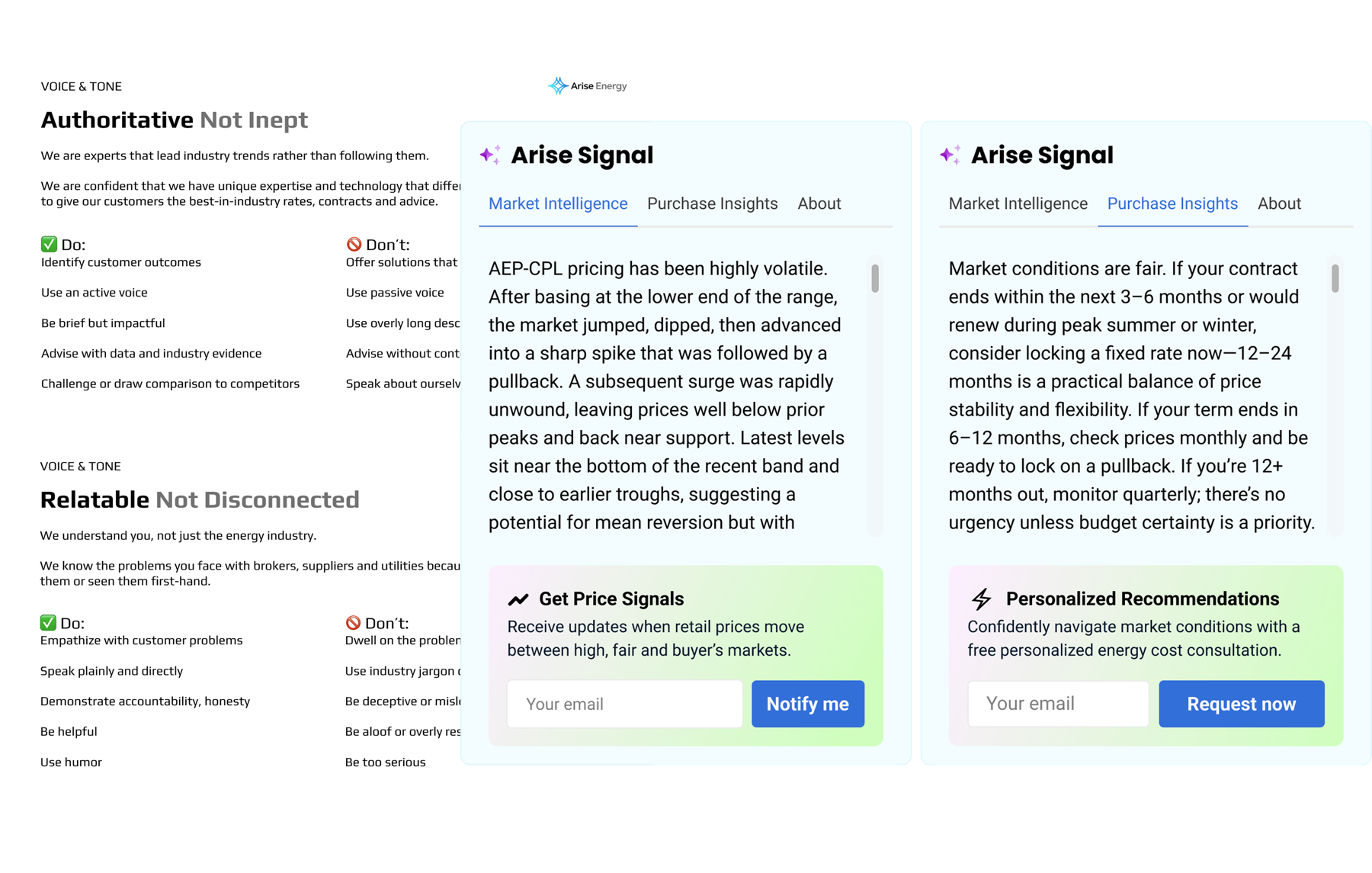
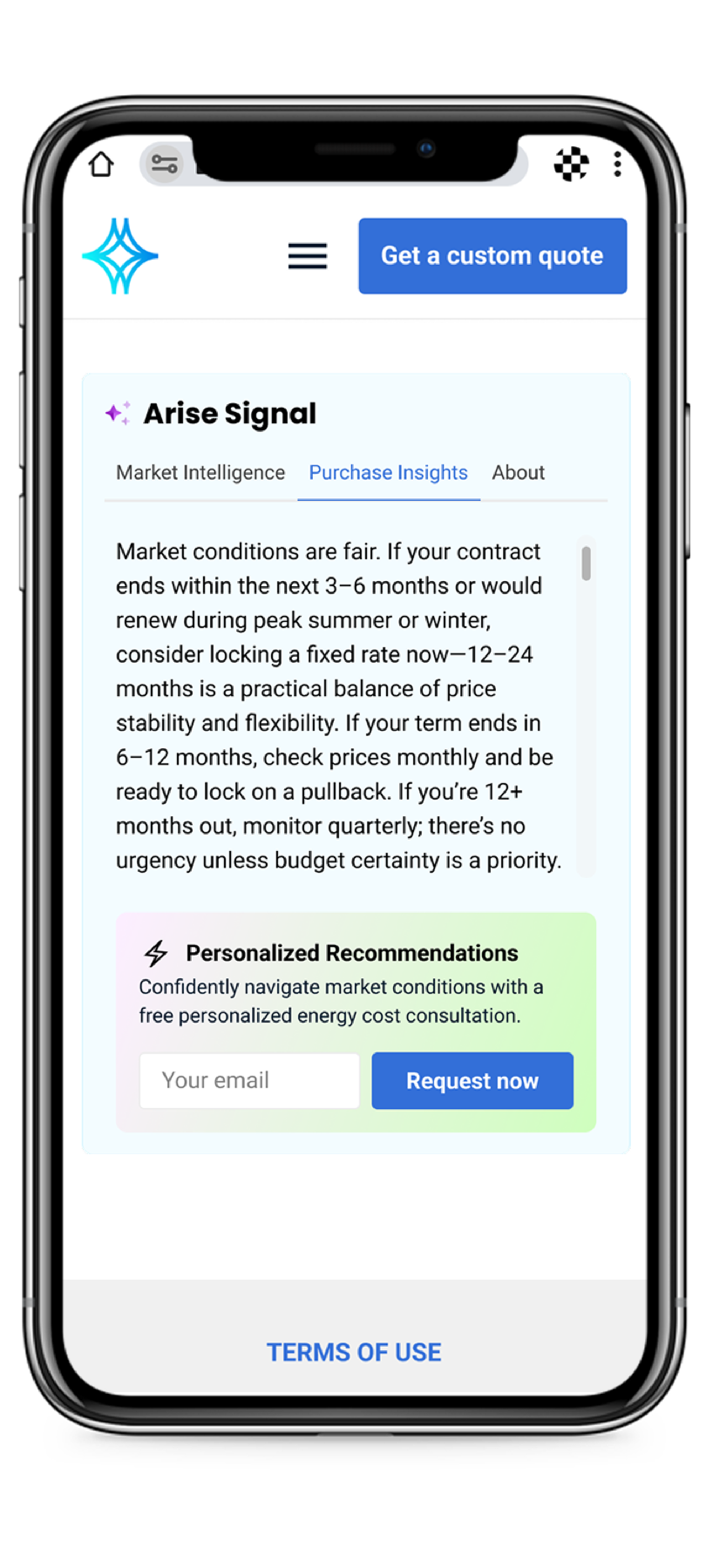
Arise Signal uses AI to summarize the data visualization and offers contextual purchase advice.

PROJECT AT-A-GLANCE

MY ROLE Lead Product Designer
PROJECT TYPE 0→1 Product Design
AI Design
Interactive Data Viz
IMPACT Increased leads 100%+
Increased conversion 100%+
WCAG Color Palette

Context

Initial State

Formerly known as Project Aquarius, the team hired an external design firm to conduct user research and design their product and marketing website. The firm designed a price history chart concept that was implemented, though there were inconsistencies in the data used that created inaccuracies as well as varied stakeholder opinion on the desired display of information.

Requirements

The team wanted to create "Price Watch" — a new price trend monitoring experience that would replace the existing price history chart. I evaluated this baseline requirements drafted by an industry expert, proposed and aligned on modifications, and crafted an experience to support user needs by addressing pain points and applying design and user experience principals.

Customer Research

I conducted baseline testing with Lyssna to gain qualitative insight on the existing chart's performance as well as generative research to better understand buyers' purchase patterns and motivations. Further, I leveraged existing research from the design firm that identified user Pain Points throughout the purchase journey, from Awareness to transacting and renewing.

Business Objectives

Due to the strong nature of the buyer-broker relationship, Arise Energy experienced significant hurdles breaking into the energy market as a commercial e-commerce marketplace. Arise aimed to create new, free tools for buyers to build their confidence as well as encourage engagement and generate leads.

Customer Pain Points

01 | Limited Rate Data Access

Energy rates are highly tailored to specific buyers, their demand, their peak load factor, supplier capacity and commodity trading. The combination of these factors and traditional norms of broker-led energy procurement lends to a reluctance of energy suppliers to publish any energy rates and enables energy brokers to charge buyers high cost finders fees, making it difficult to access and evaluate energy prices and market conditions.

Customer POV
Likes

My broker works with suppliers to get rate information so I can focus on my own work.

Dislikes

Information I get is limited to what my broker chooses and when they share it.

Needs

On-demand, free access to commercial energy rates to the monitor market.

How might we surface on-demand commercial energy rates to help buyers monitor market prices over time?

KEY CONSIDERATIONS

Aligning on Rate Type

Rate type alignment
Business Savings Increase Clarity

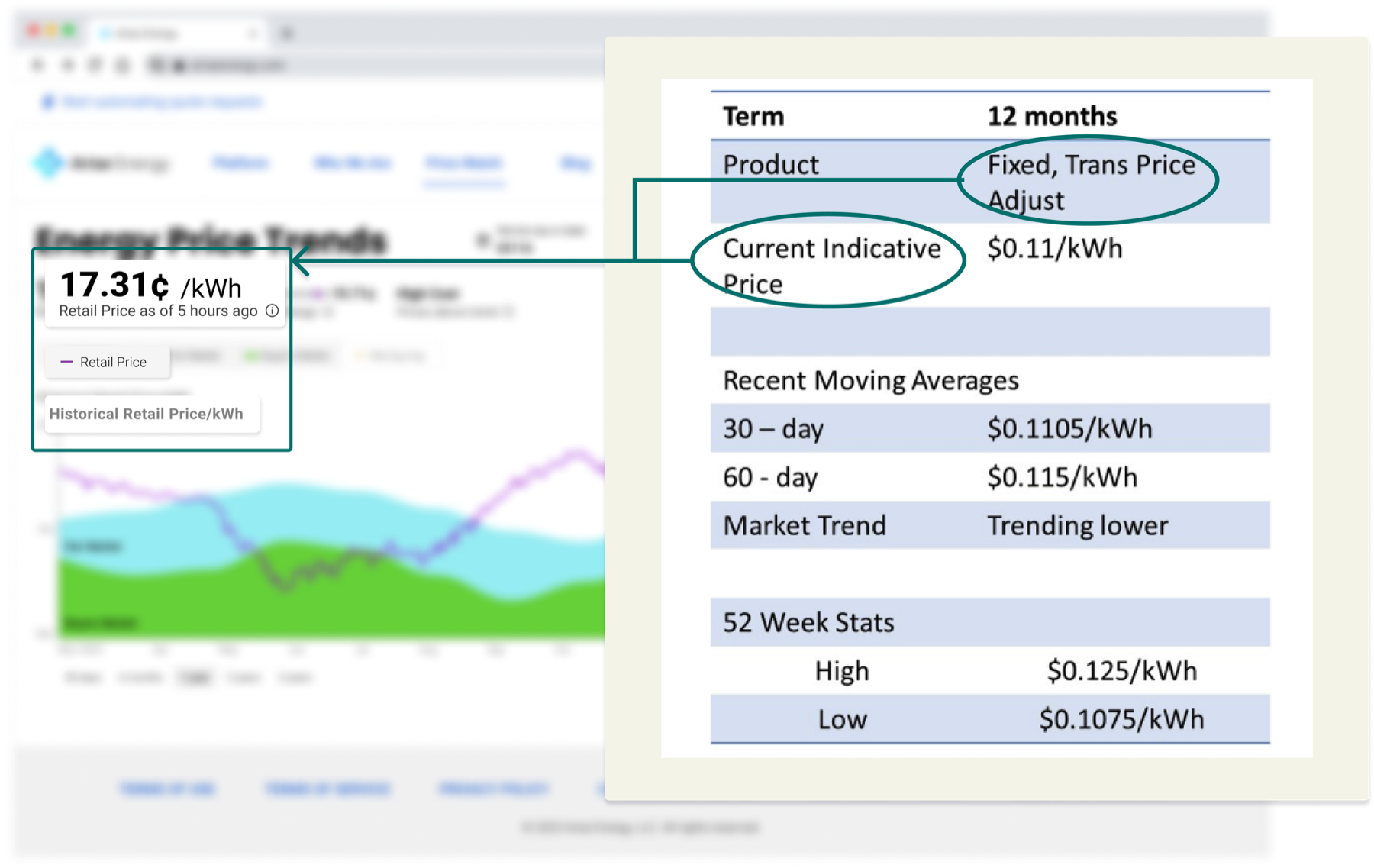
Inconsistent rate naming created misalignment and internal confusion. I aligned stakeholders on a rate type with the most value for customers that could be reliably secured on a regular basis. Choosing "Retail" over "Indicative", "Matrix", and "Trans" removed the need for a paid subscription to acquire and publish the rates and improved clarity with team members and for commercial buyers.

Simplifying Contract Term
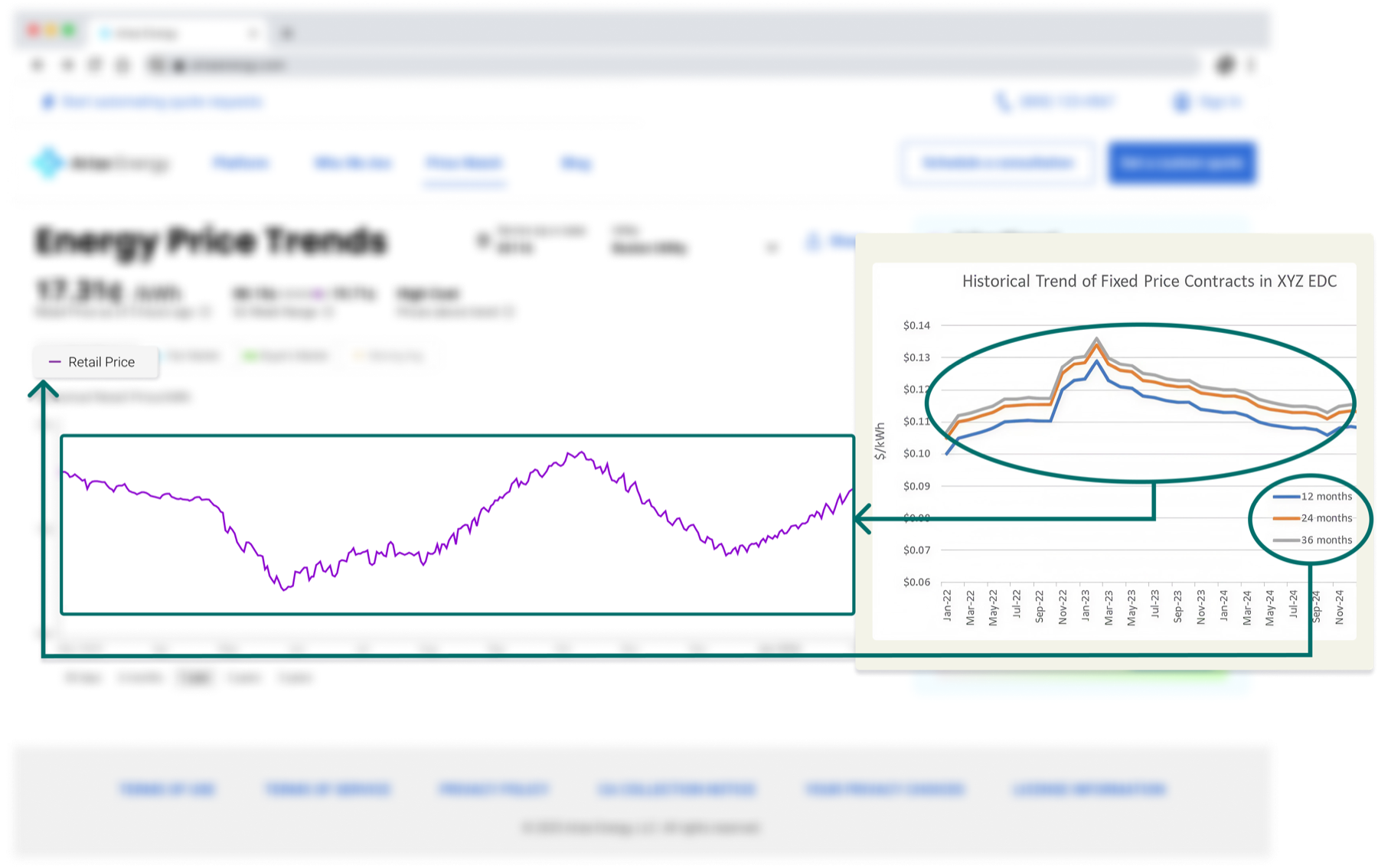
Contract term simplification
Drive Conversion Increase Clarity

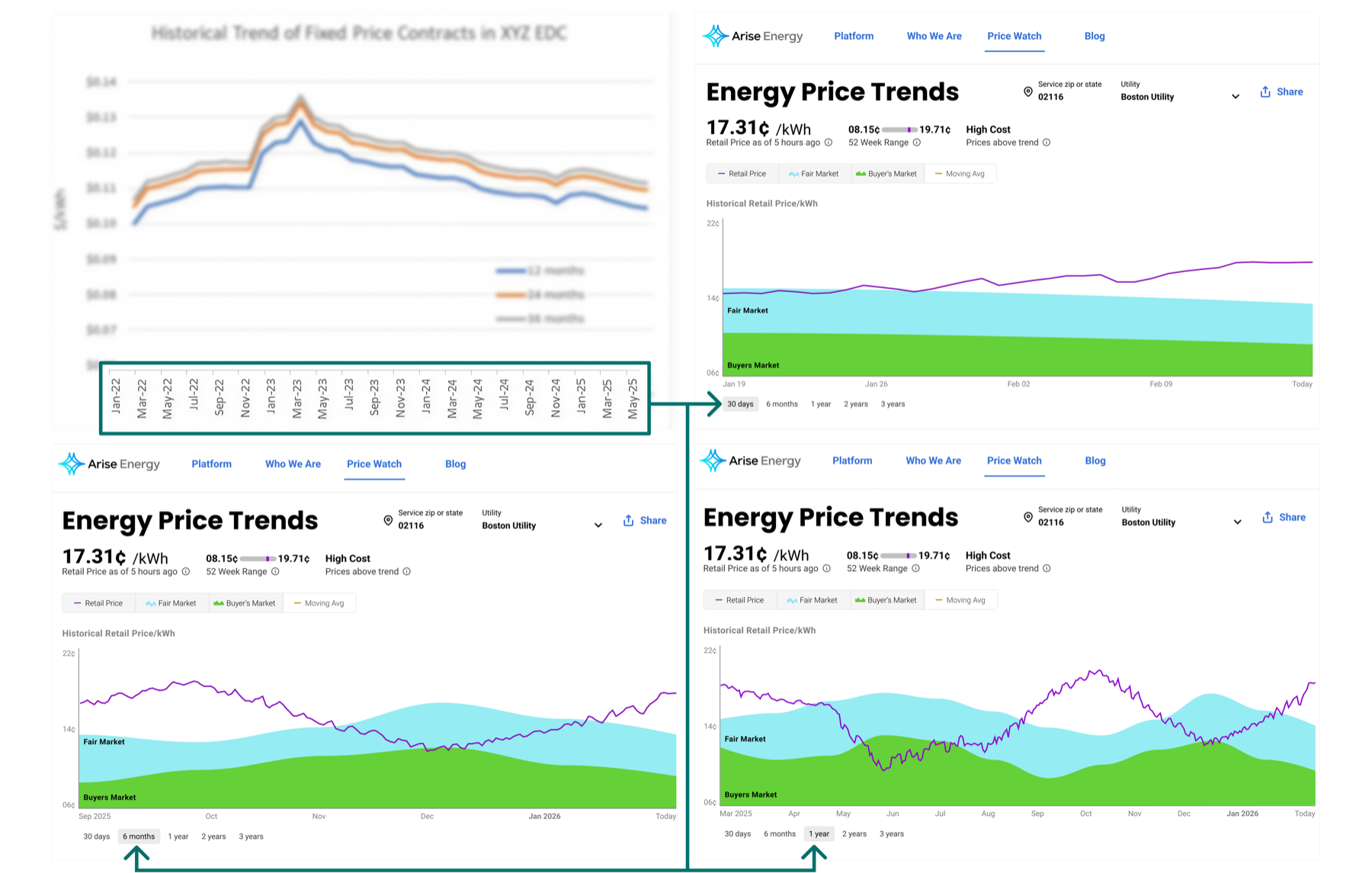
Traditional rate charts display 12, 24 & 36 month contract term lines. Research indicated that multiple lines appear as unique suppliers not terms. Further, users confused term periods with the display of rates over time on the x-axis. I aligned the team on providing only the most common term to reduce confusion and focus on the use case being in the "Awareness" stage of the journey not the "Decision" stage.

Enabling Time Period Control
Time period control
Boost Engagement Drive Conversion

Commercial energy buyers engage in the purchase journey with varying time constraints. They may have more than a year or only a few months to make a decision. Given this, buyers want to view rate trends over shorter or longer time periods. I designed the chart to give buyers more control by enabling selection for the viewable time period. Further, this control enables engagement tracking.
02 | Limited Context & Controls

Traditional energy pricing is led by an energy broker, leaving buyers little room to explore unique scenarios based on market conditions. Lack of market context could limit choice and lead to increased energy costs.

Customer POV
Likes

My broker provides me more than one rate to consider when possible.

Dislikes

The rates are often based on arbitrary or narrow factors.

Needs

Ability to contextualize market conditions to evaluate energy prices.

How might we contextualize market conditions to enable visitors to evaluate energy rates?

KEY CONSIDERATIONS

Using Simple Language

Language and market regimes
Increased Clarity Drive Conversion

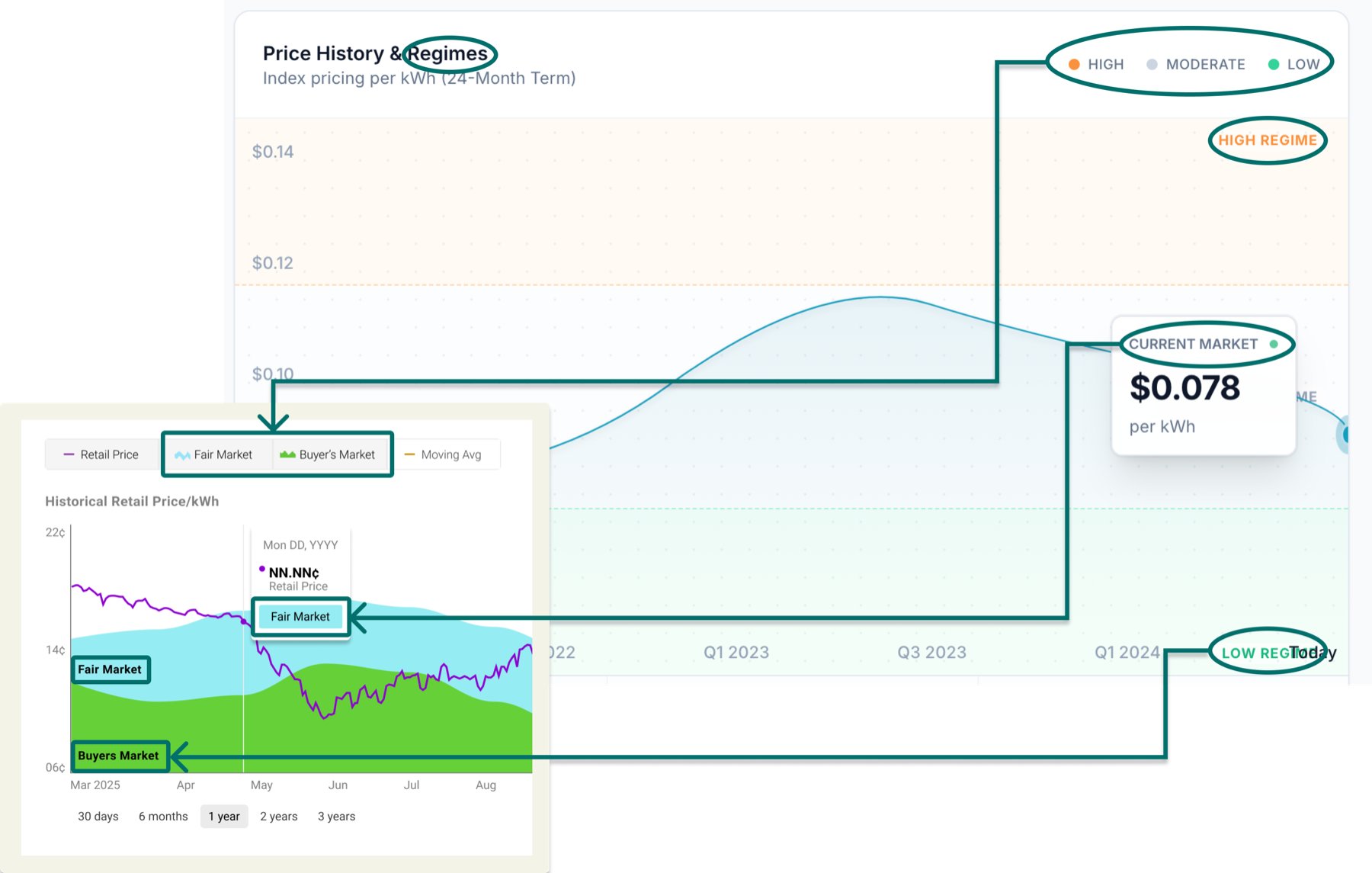
Energy brokers and industry experts frequently discuss "Price Regimes" with buyers and colleagues. Regimes are described from an industry point of view and are inconsistently defined. I aligned stakeholders on replacing "Regimes" with the well-known terms of Buyer's, Fair & High "Market". Whereas "Regimes" required lengthy explanation, the familiar terms required little to no explanation.

Enabling User Control

Trend view control
Boost Engagement Drive Conversion

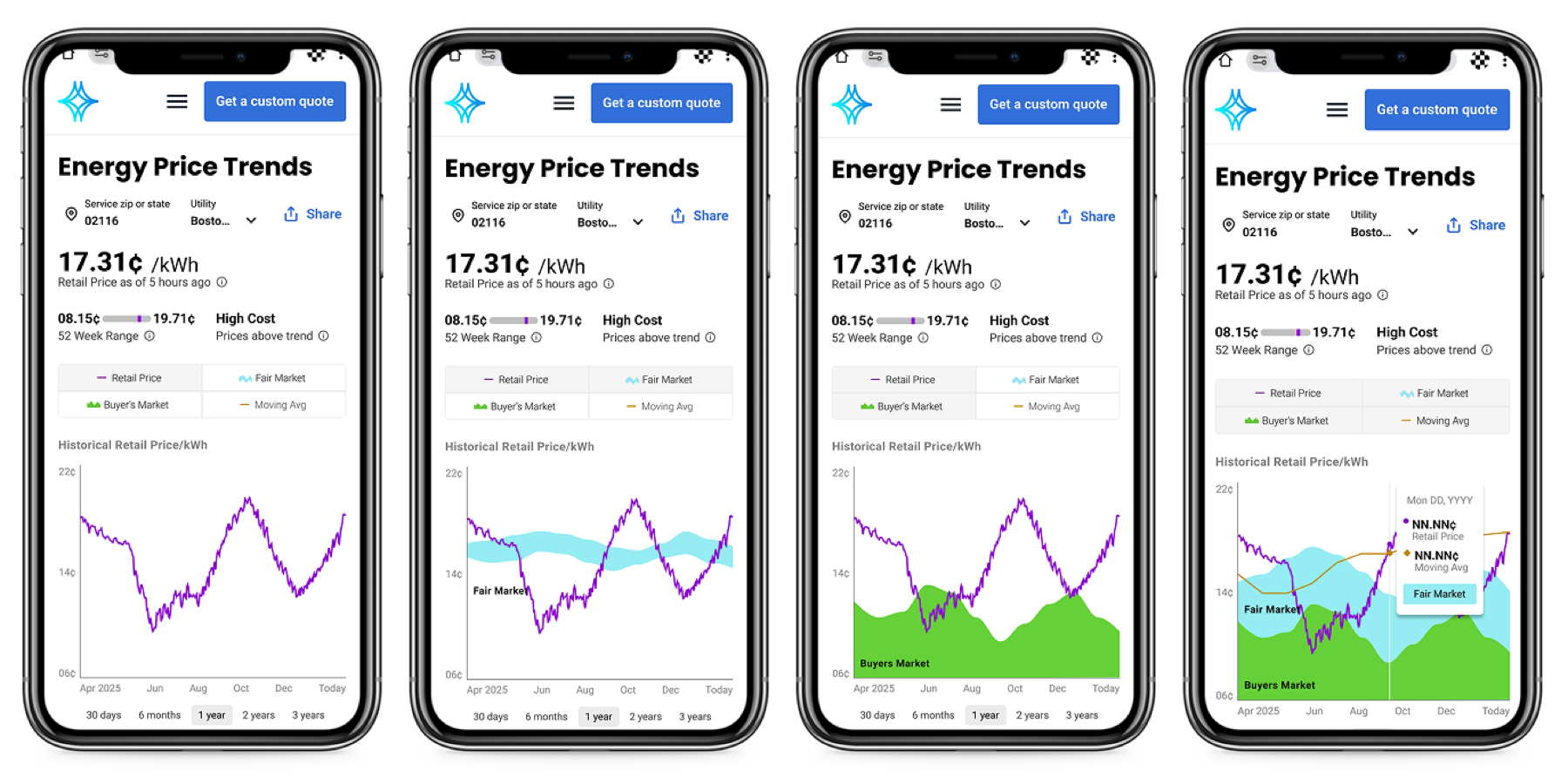
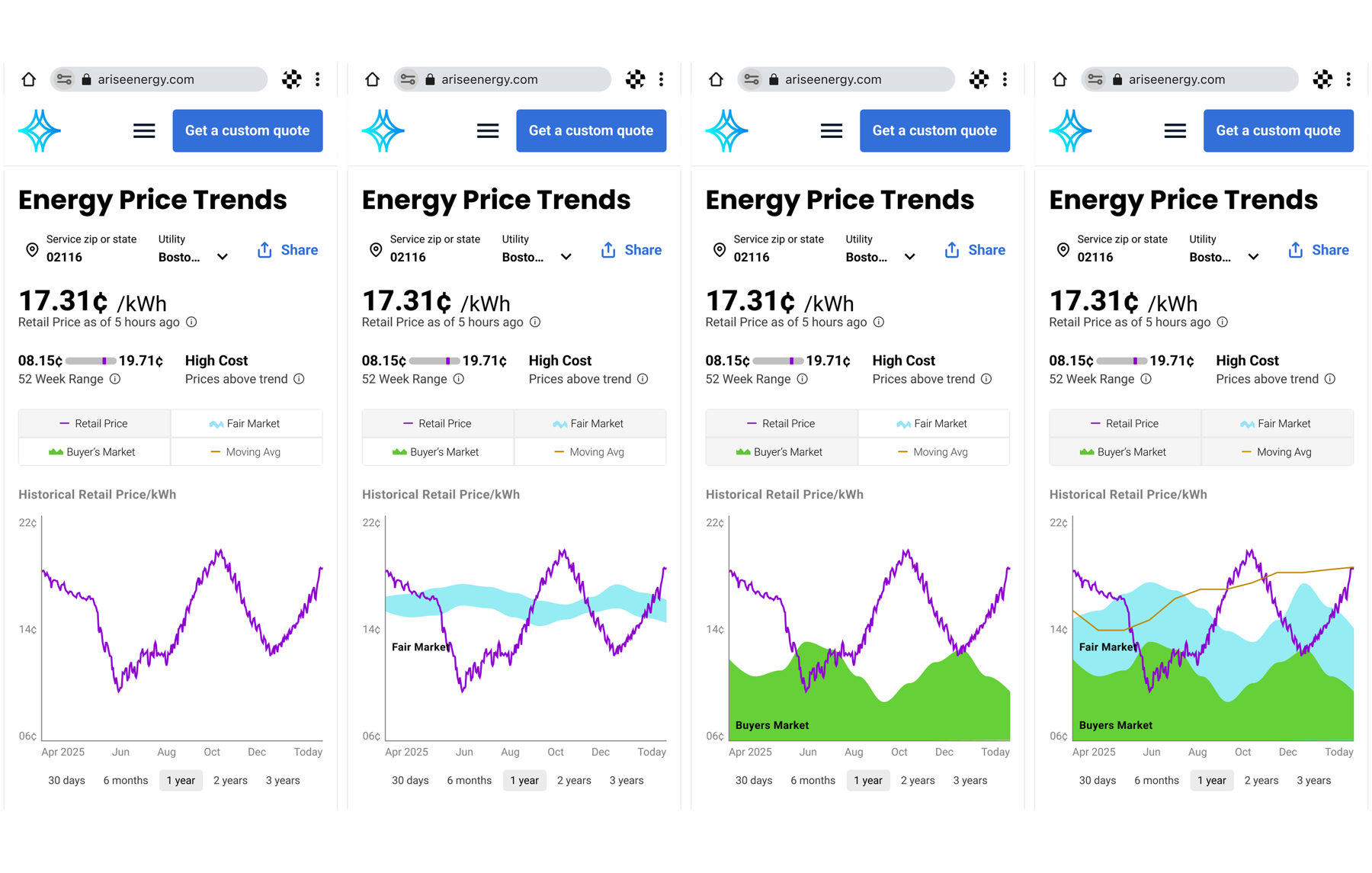
Because procurement specialists cannot always make their purchase during Buyer's or Fair Market Conditions, they need to understand trends over time. At the same time, buyers need to clearly identify the market condition of prices at any given moment. Using the legend as a mechanism for chart controls enables buyers a custom view of the market rate data that is important to them.

Reducing Cognitive Load

Reducing cognitive load
Increased Clarity Drive Conversion

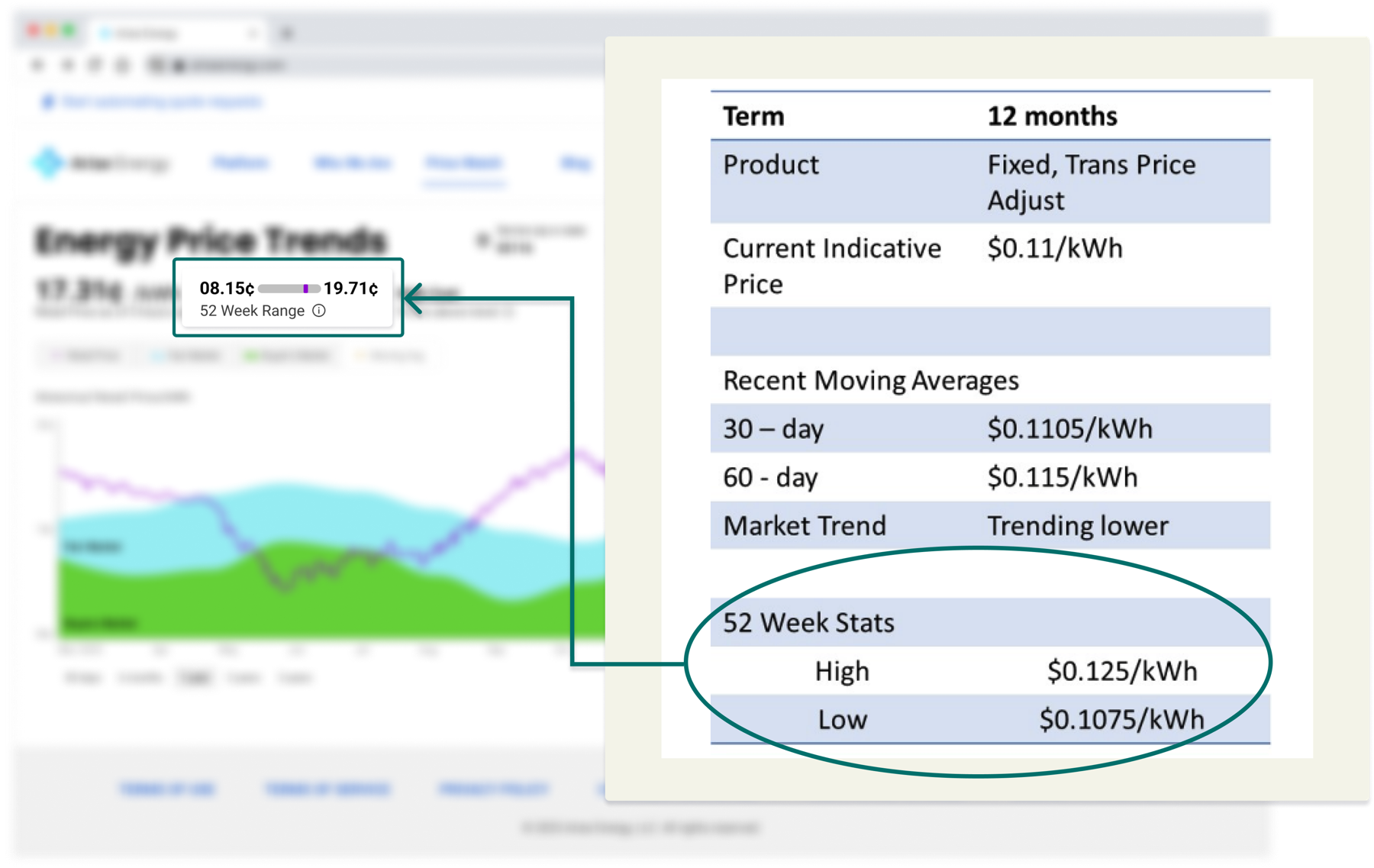
Requirements to display the lowest price and highest price in the last 52 weeks set a baseline for the context needed for buyers, though the rate alone puts the effort on the buyers to mentally compare the current price to the high and low. I convinced stakeholders to use a simple line to visualize the low-end, high-end and the current price with a marker on the line to reduce cognitive load.

03 | Low Confidence in Personal Expertise

Deregulation of energy markets enabled consumer choice, though, brokers have largely controlled the commercial purchasing process. Commercial energy purchases can be costly and have significant budget implications at even fractions of a cent. Brokers have extensive experience in the industry, but low incentive to share expertise and save customers money given the nature of earning commission on sales and the customer need to focus on running their own business.

Customer POV
Likes

My broker is an expert that can navigate a complex industry and negotiate pricing.

Dislikes

I need extensive industry knowledge to know if my broker's advice is beneficial.

Needs

Third-party guidance on energy market conditions to take my next step confidently.

How might we provide guidance on energy market conditions to enable buyers to take their next step confidently?

KEY CONSIDERATIONS

Scaling Expertise with AI

Scaling expertise with AI
Scaling AI Systems Thinking

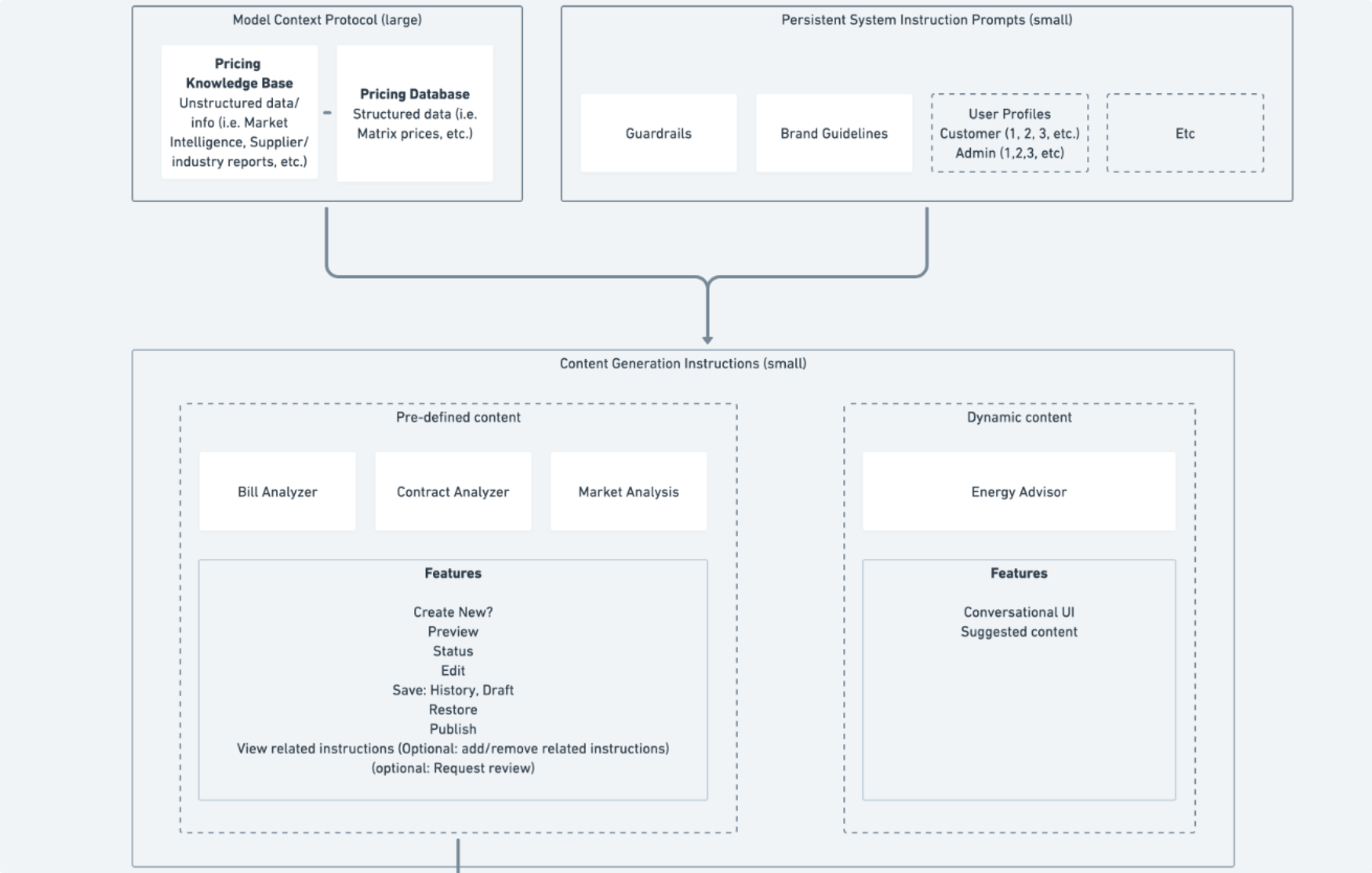
Though Arise Energy is sponsored by Constellation Energy, a Fortune 200 company, it still operates in a startup capacity with a small sales team that serves buyers across 50 major distributors. To reach a broader audience, their years of nuanced expertise needed to scale. Using my background in design for Machine Learning, I created a repeatable framework for the Arise MCP Knowledge and Data Base paired with Persistent System Instructions to reliably scale energy expert insights across regions.

Handling Data with AI

Handling dynamic data with AI
AI Agent Systems Thinking

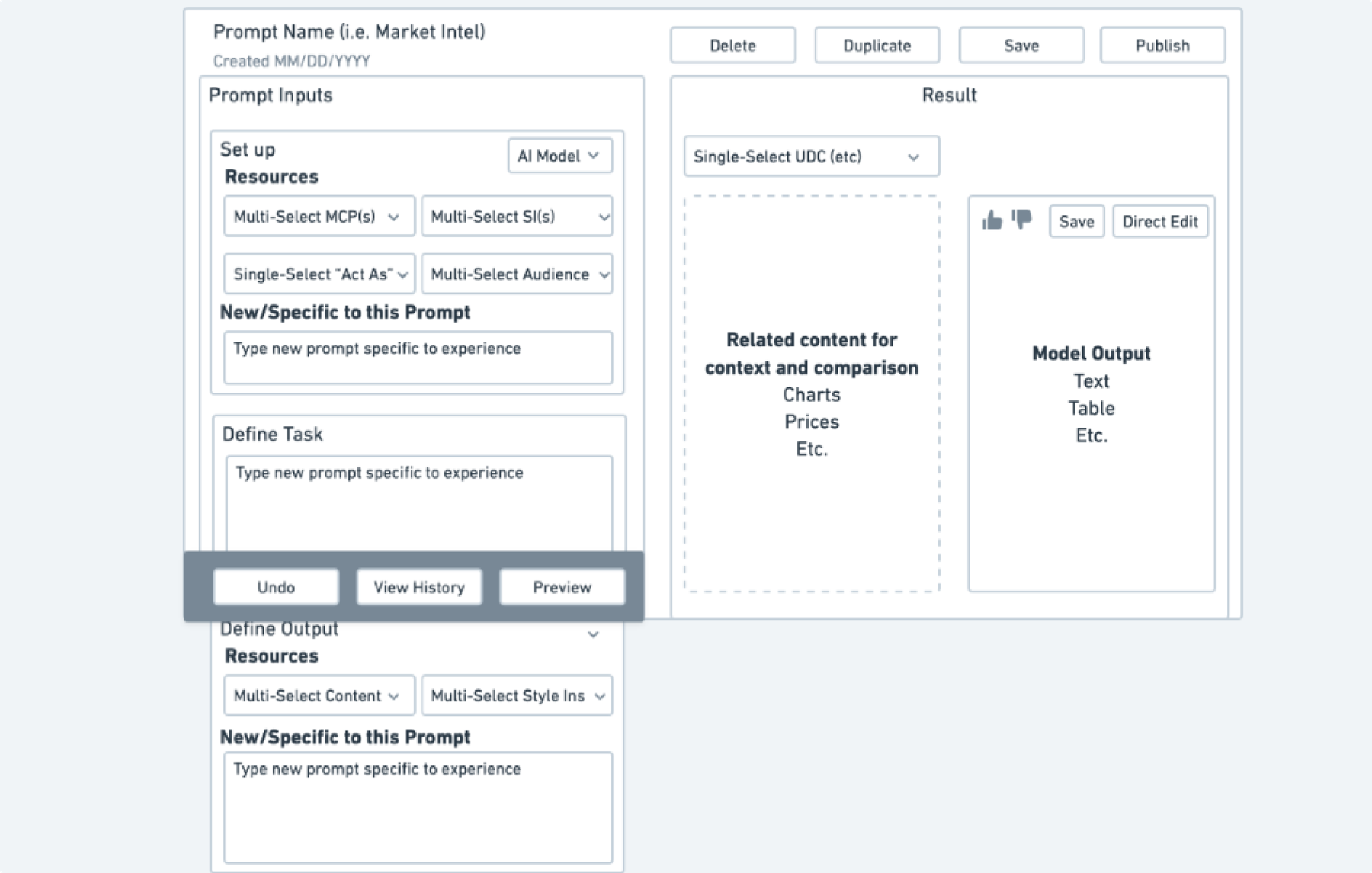
My experience designing for Machine Learning enabled features at UserTesting gave me the expertise needed to establish guardrails for the Admin prompting experience that generates the insights for customer-facing AI Market Analysis and Purchase Timing Insights. Using PAIR Principles, I architected a zero-to-one flow and wireframe interface that enabled prompt creation, editing, history tracking, model feedback mechanisms, duplication, preview and publication.

Crafting Advice for Humans

Crafting advice for humans
Risk Mitigation Building Trust

Given buyers' lack of expertise and considerable need for trust in energy industry advice, standards were needed for AI insight output. I established foundational guardrails for the voice, tone, and content output generated by Arise's AI. I created voice and tone brand guidelines and restricted industry jargon in the output. Further, insights were required to follow a basic pattern so the Arise team could monitor and evaluate the quality. Any deviation from the standards could result in the loss of trust and fewer leads.

Bringing It All Together

Beyond specific problems, additional features and elements all came together to create the final experience. Below is a snapshot of the overall experience I designed, including feature definition and design as well as content creation and design.

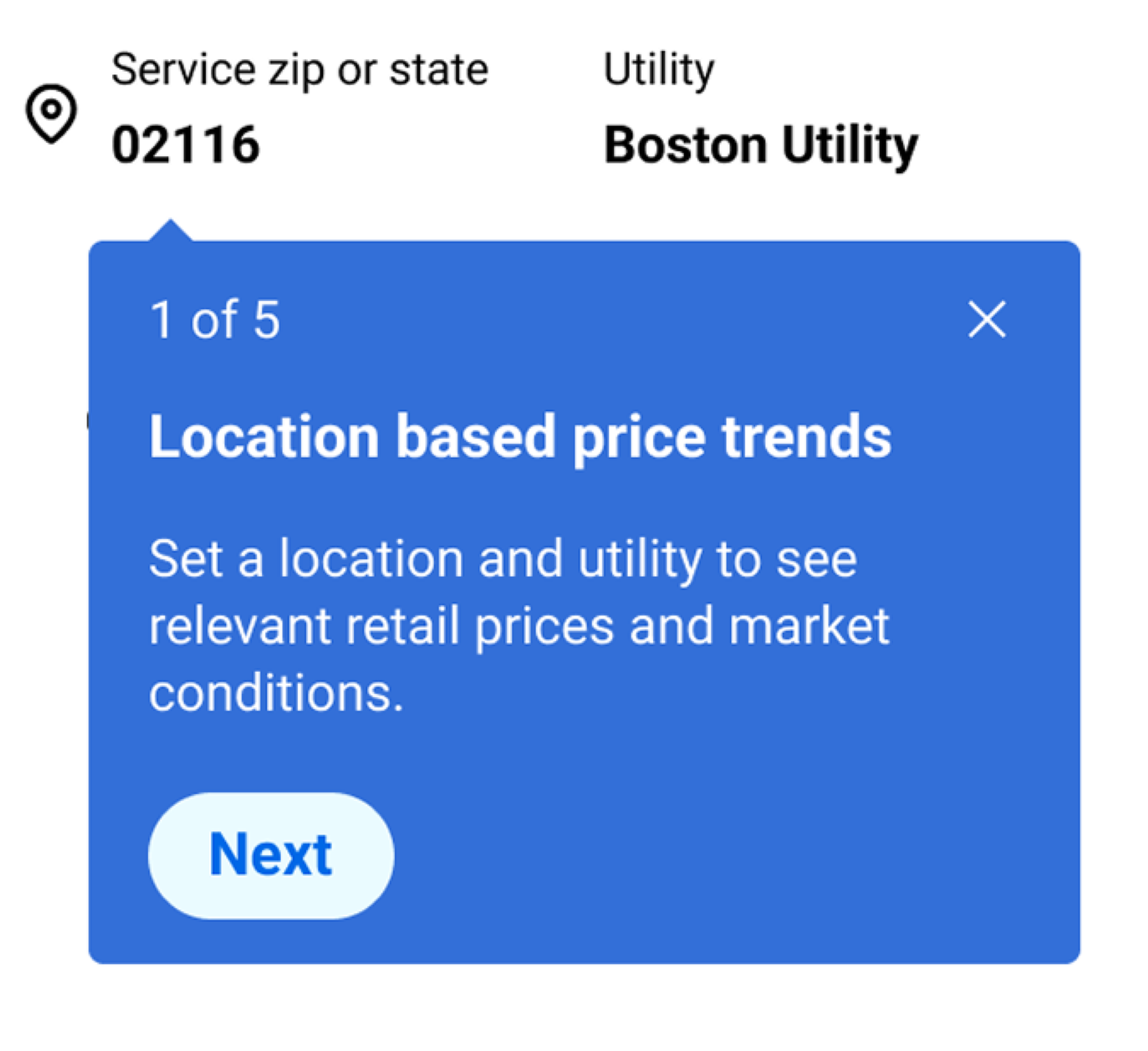
Product tour

Engagement

Product tour to educate & build trust

Personalization

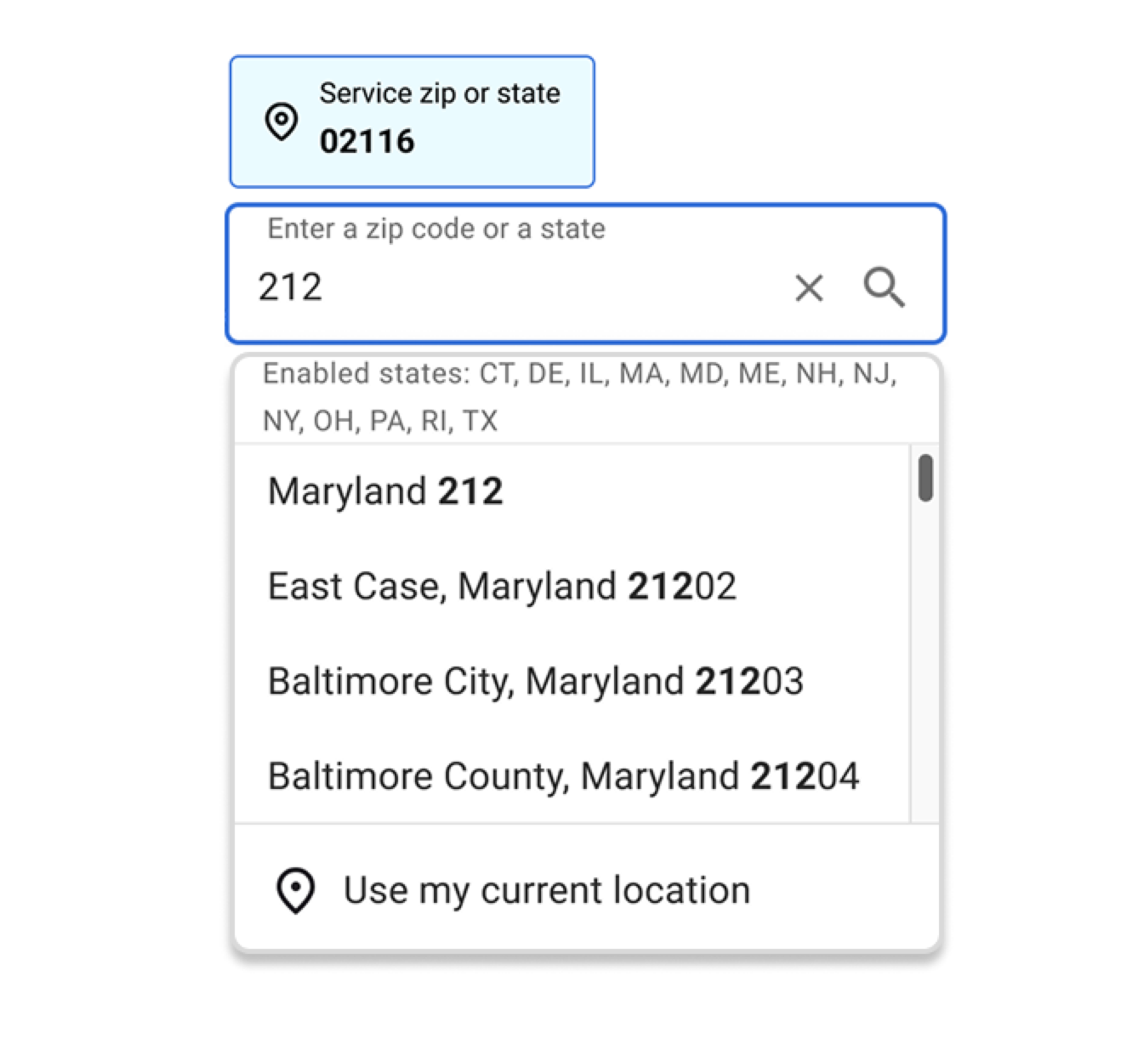
Personalization

Detect IP Address & use location prompts

Hierarchy

Hierarchy

High impact content above-the-fold

Responsive design

Responsive

Pixel-level detail across multiple devices

Custom view

Custom View

Interactive chart legend and tooltip on hover or touch

AI scaling sales

AI Scaling Sales

Build trust with low risk purchase advice

Growth through sharing

Growth

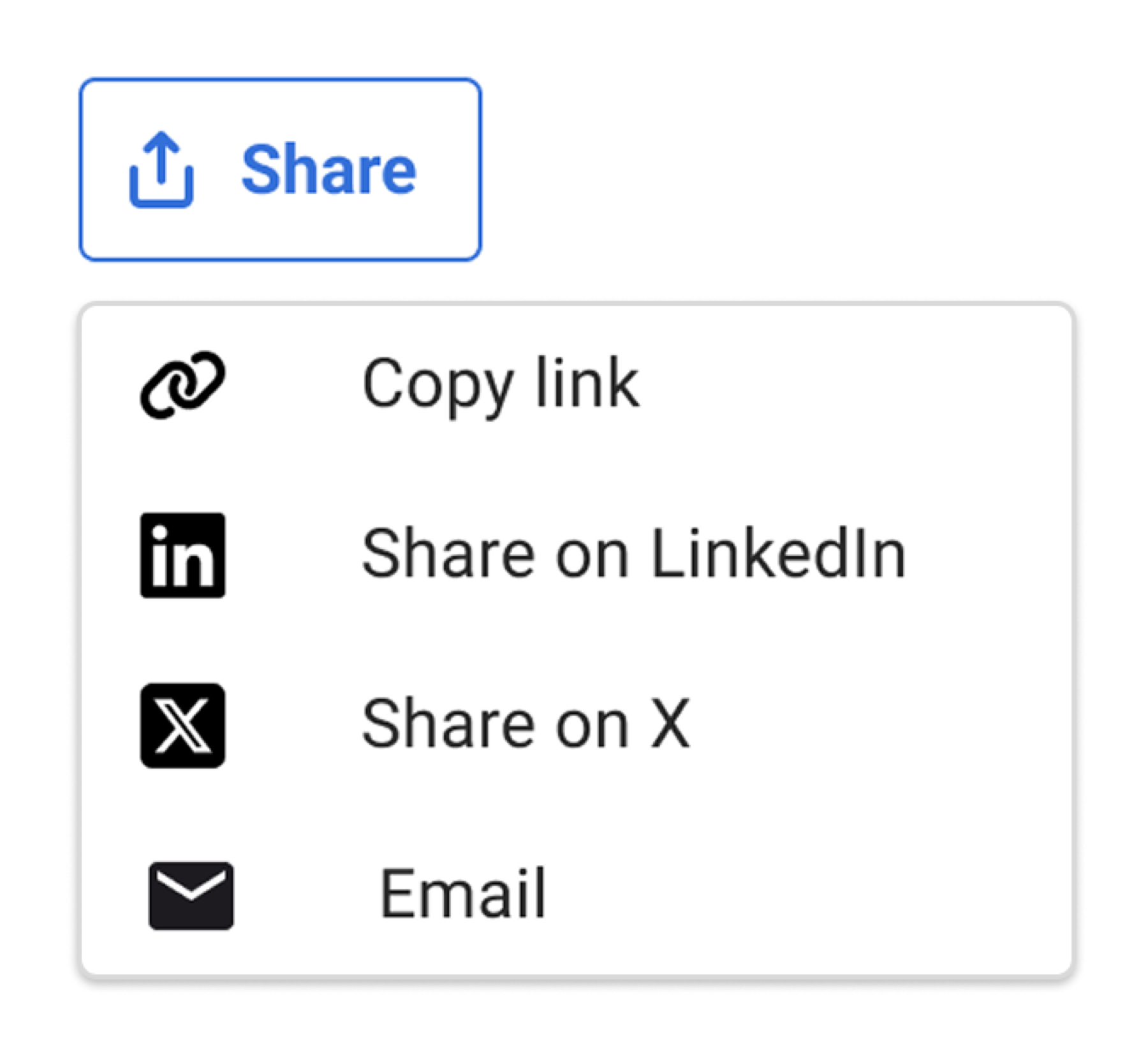
Expanding reach with content sharing

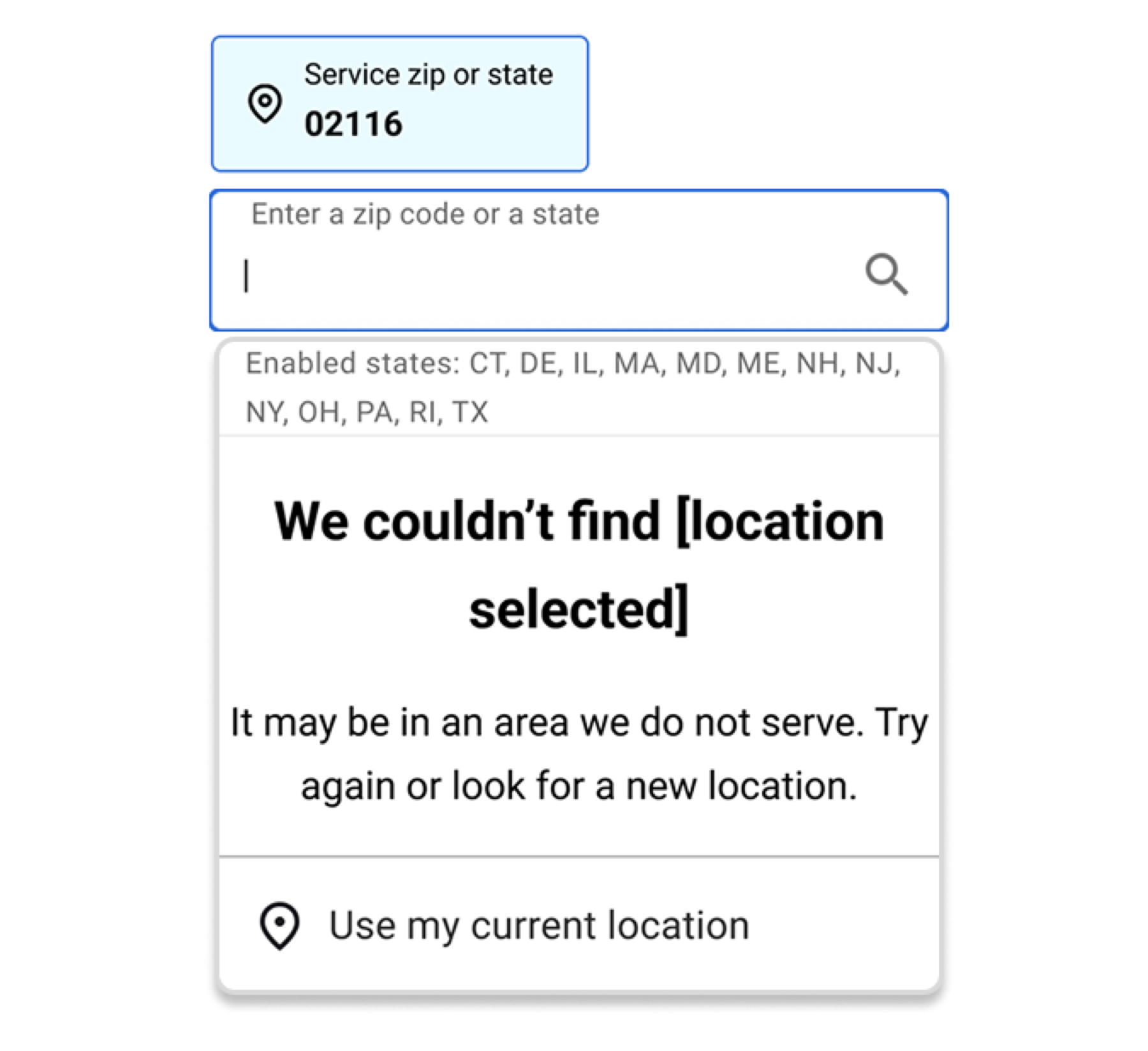
Graceful failure

Graceful Failure

Guiding users when data is unavailable

More Case Studies

AcreVision case study
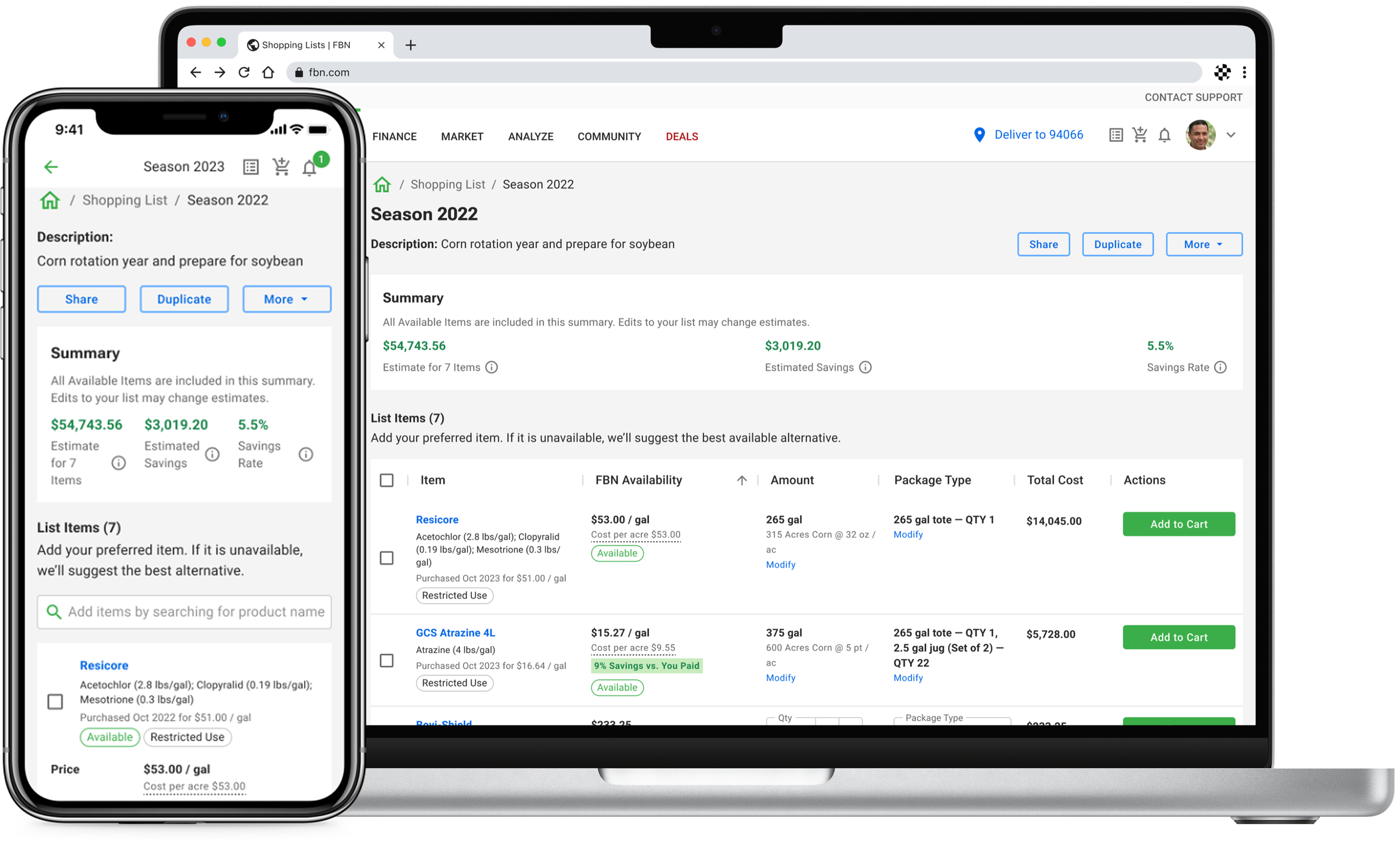
FBN | FinTech Growth

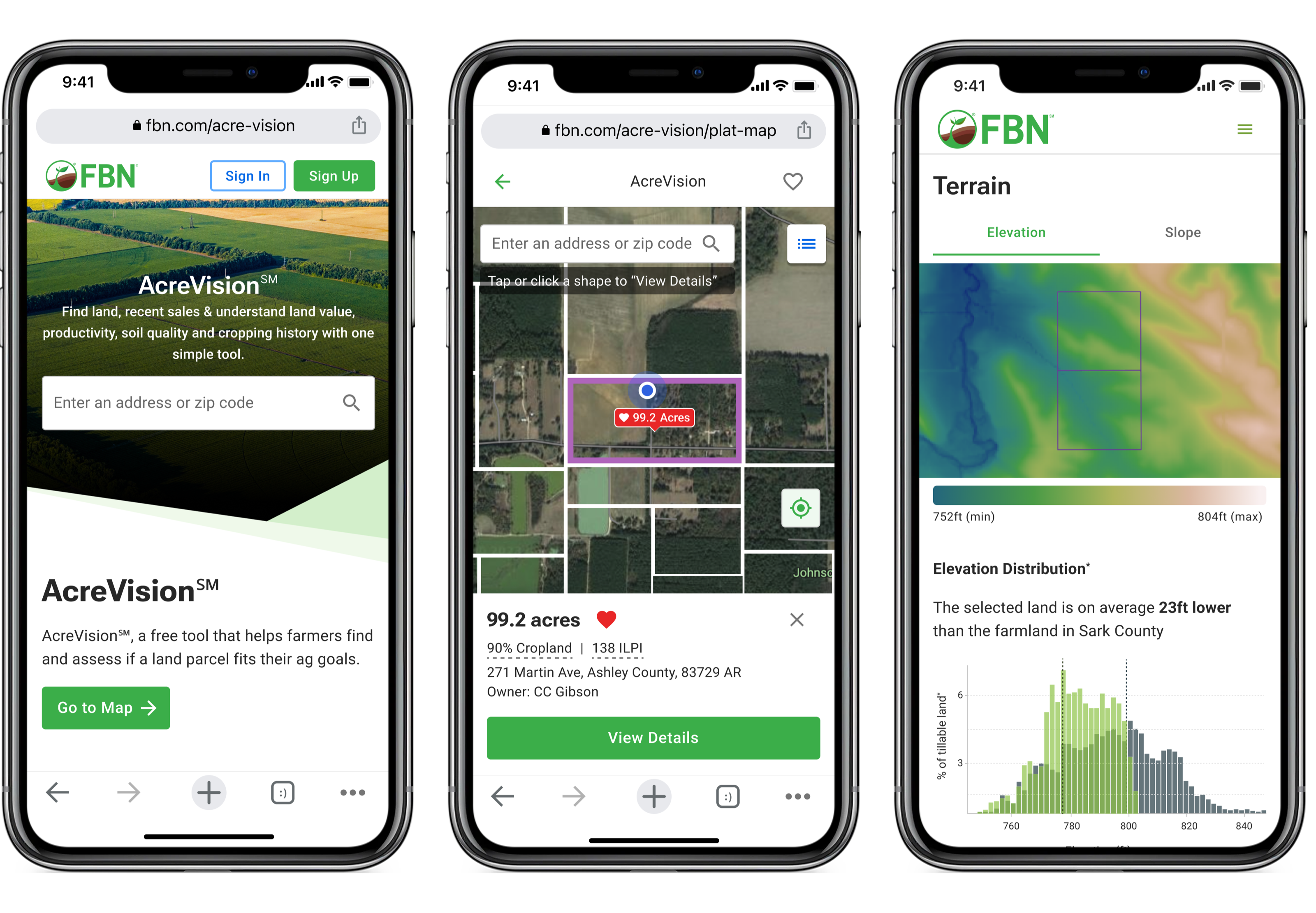
AcreVision

Leading cross-functionally to strengthen UX for a farmland research & valuation tool

Interactive Path Flows case study
UserTesting | B2B CWM

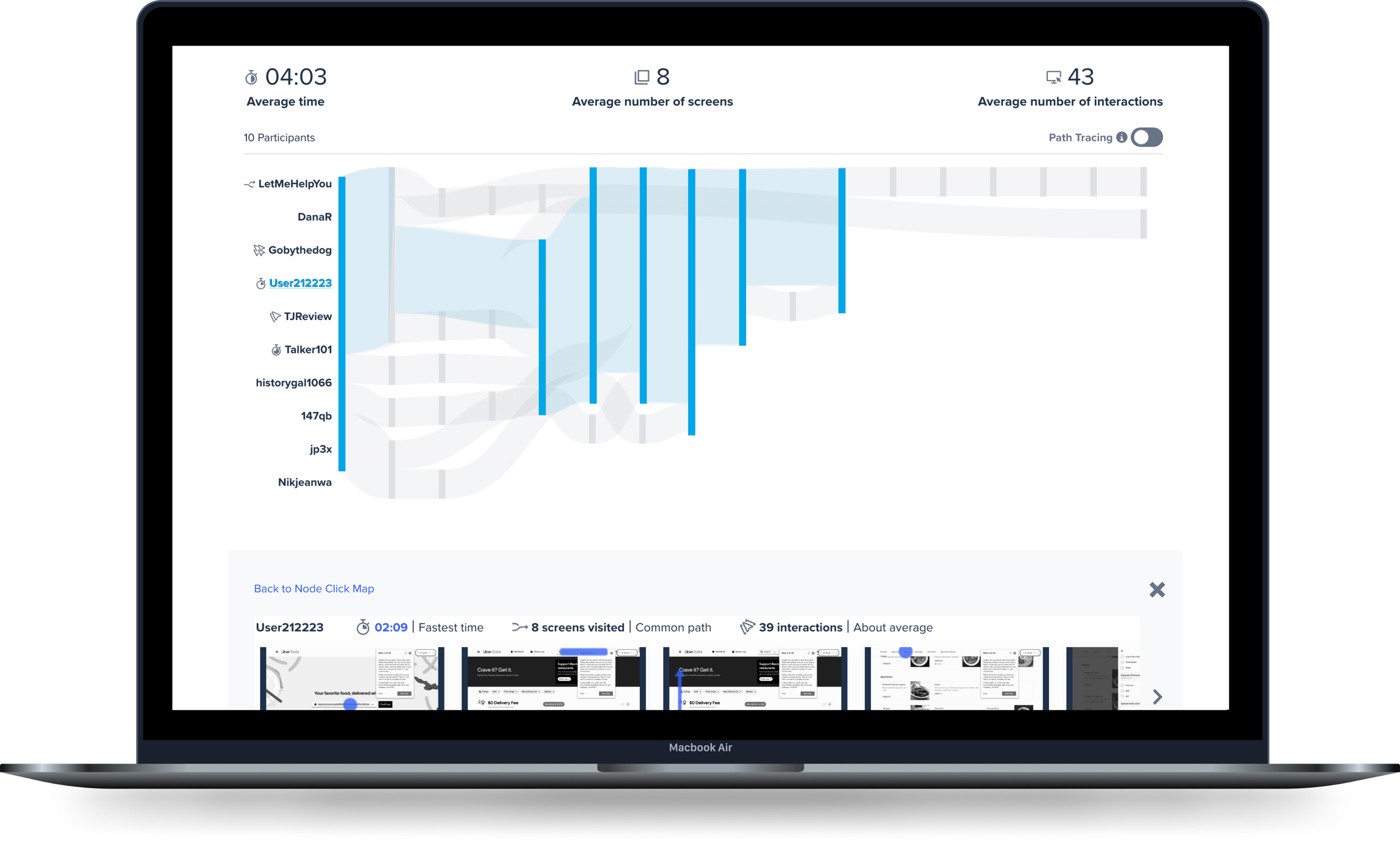
Interactive Path Flows

Saving B2B users hours by bridging the quantitative & qualitative UXR analysis gap

Insurance Optimizer case study
FBN | InsurTech

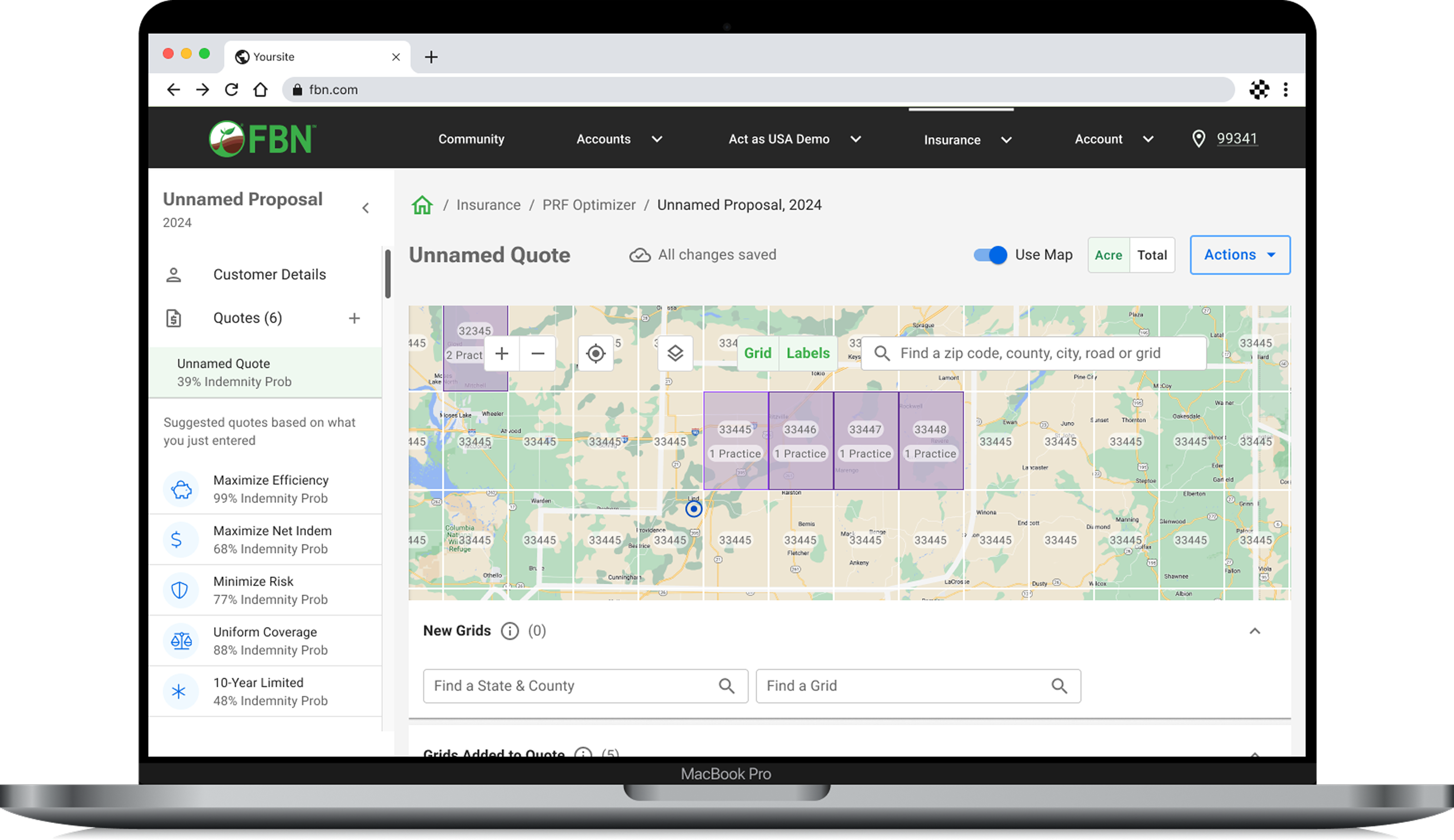
Insurance Optimizer

Reducing the time to quote a B2B policy from 20 to 3 minutes, increasing leads by 18%

Shopping Lists case study
FBN | B2B MarketPlace

Shopping Lists

Increasing conversion by enhancing information hierarchy & surfacing key data

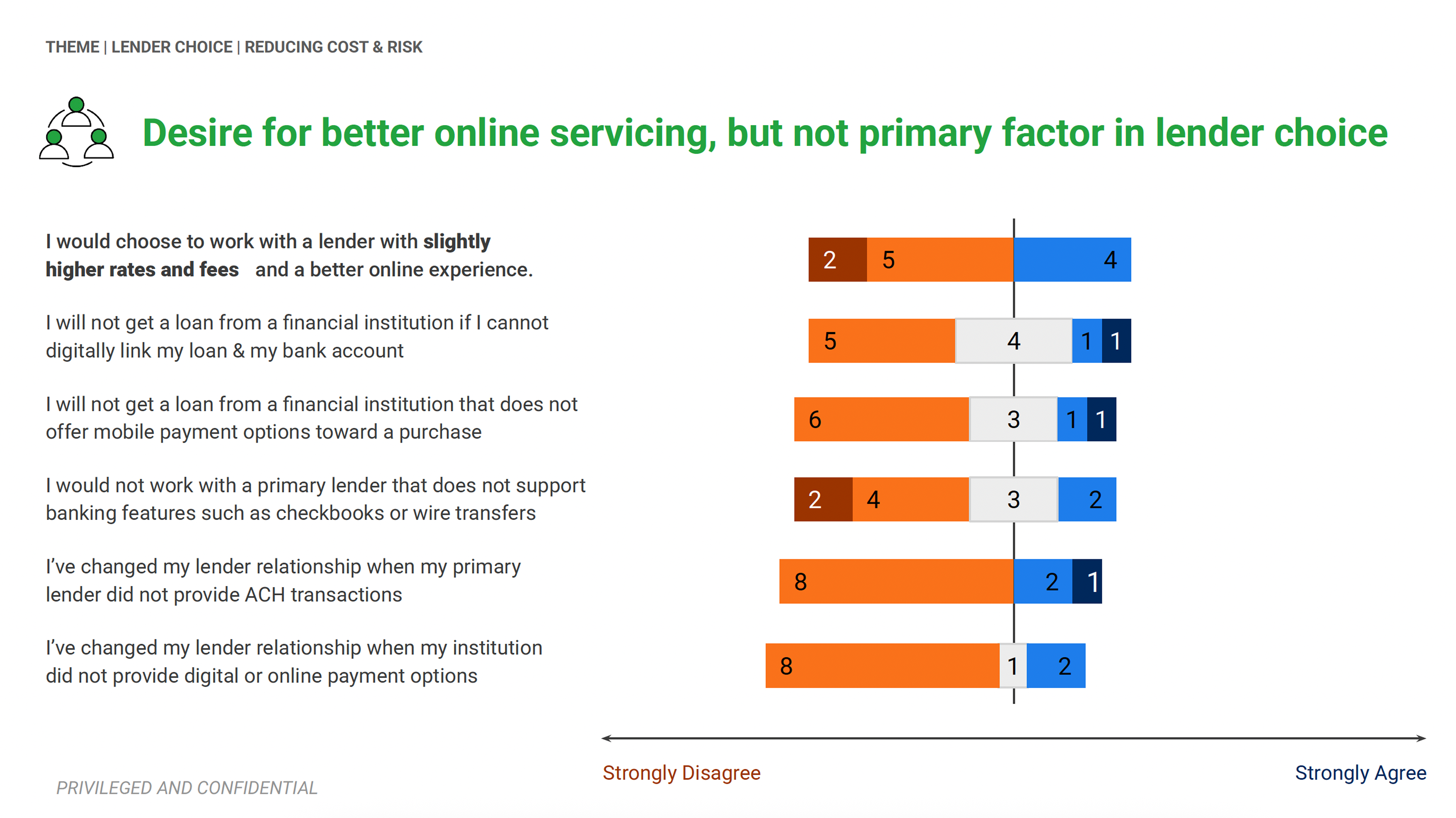
Banking as a Service case study
FBN | Fintech

Banking as a Service

Saving borrowers thousands by identifying gaps in loan pay-off data & prioritizing the UXD